
Last updated: November 2026
Quick answer: Choosing a flexible endoscope CDMO in
2026 starts with one decision: do you need a reusable
finished scope or a single-use finished scope? The
manufacturing, sterilization, reprocessing validation and cost models
are different. Buyers looking for “single-use endoscope CDMO partners”
and buyers looking for reusable gastroscopes, colonoscopes or
bronchoscopes should not use the same shortlist. Endowista is a flexible
endoscope OEM and CDMO partner focused on reusable
scopes and components; it does not manufacture complete
single-use endoscopes.
This guide is for device startups, brand owners and distributors who
need a practical way to shortlist an endoscope CDMO without
guessing.

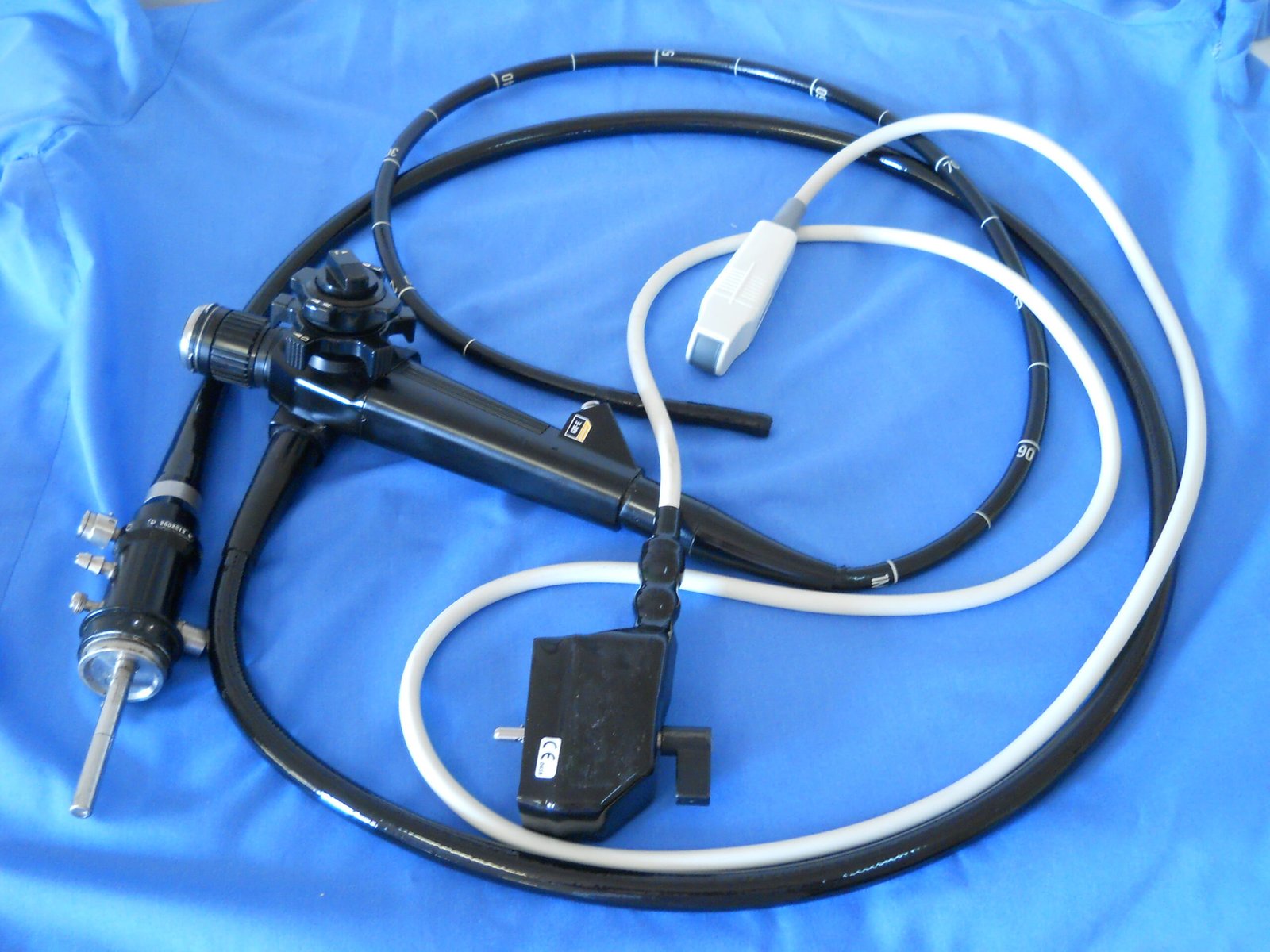
background. Photo: Bluestoking via Wikimedia Commons,
CC BY-SA
4.0.
If you already know you need a reusable flexible
endoscope partner, you can request
a quote while you work through the checklist below.
Reusable vs
Single-Use: Which CDMO Do You Need?
The search interest around “single-use endoscope CDMO partners” is
real. So is demand for reusable GI and pulmonary scopes. The two product
types share optics, bending sections and insertion-tube know-how, but
the factory work and regulatory package diverge.
| Topic | Reusable flexible endoscope CDMO | Single-use (disposable) finished-scope CDMO |
|---|---|---|
| Typical finished products | Gastroscopes, colonoscopes, bronchoscopes, sigmoidoscopes | Single-use bronchoscopes, duodenoscopes, ureteroscopes, cystoscopes |
| Sterility model | High-level disinfection or sterilization between patients; validated reprocessing instructions |
Terminal sterilization and sterile packaging for one patient |
| Key design constraint | Survive hundreds of reprocessing cycles; leak integrity; serviceability |
Cost per unit, packaging, shelf life, single-patient safety |
| Regulatory focus (US) | Design controls + reprocessing validation for complex reusable devices |
Design controls + sterilization validation + biocompatibility |
| Cost model for hospitals | Capital + repair + reprocessing labor | Per-procedure device cost; no repair |
| Who often partners with a CDMO | New brands, regional brands, companies transferring production | Brands that want a sterile disposable line without building a plant |
Hospital buyers comparing capital and per-procedure economics can
also start from our 2025
endoscope price and cost guide (to be refreshed for 2026).
When a single-use CDMO is the right search:
- Your product is a finished scope intended for one
patient, then discarded. - You need EO (or equivalent) sterilization, sterile
barrier packaging and shelf-life data. - Infection-control positioning is central to the product story. FDA
has urged hospitals to move away from older fixed-endcap duodenoscopes
toward designs with disposable components or fully disposable
duodenoscopes, based on postmarket surveillance and safety
communications updated through 2022.
When a reusable CDMO is the right search:
- You are launching or transferring a reusable GI or
bronchoscopy line. - You need durable bending sections, insertion tubes, leak testing and
a service/repair story. - Your 510(k) or CE file will include reprocessing
validation, not only sterilization of a disposable device. - You want endoscope
components (insertion tubes, bending sections, light guides,
operation sections) as well as finished assemblies.

reusable-scope workflows. Photo: Galenus Medical via Wikimedia Commons,
CC BY-SA
4.0.

Wikimedia Commons,
CC BY-SA
3.0.
A real-world brand + manufacturing split
(single-use): Olympus markets the H-SteriScope
single-use bronchoscope portfolio in the US. Olympus’s product page
states that SteriScope is a trademark of Hunan Vathin Medical
Instruments Co., Ltd. That is a public example of a brand owner
selling a single-use line that is manufactured by another specialist. It
shows why “single-use CDMO / OEM partner” searches exist—and why that
partner list is different from a reusable-scope CDMO list. For the
broader brand landscape (reusable leaders and single-use portfolios),
see our Top
10 flexible endoscope manufacturers in 2026.
What a Flexible
Endoscope CDMO Should Cover
“CDMO” is used loosely in medical devices. For flexible endoscopes, a
useful partner usually covers some or all of the following (see also
Endowista’s end-to-end
manufacturing solutions and CDMO
page):
- Design and DHF support — design inputs, risk
management, verification and validation. - Precision manufacturing — CNC, laser cutting for
bending sections, polymer processing for tubes and sheaths. - Assembly in controlled environments — clean
workshops for optical and channel assembly. - Testing — optical performance, angulation, leak
testing, electrical safety where applicable. - Regulatory support — technical documentation and
registration guidance for target markets (Endowista also lists consultancy
services). - Scale-up — prototype to pilot to volume, with
change control.
Reusable and single-use CDMOs both need items 1–6. Single-use
partners add sterilization and sterile packaging capacity. Reusable
partners add reprocessing validation support and often a repair
or spare-parts path.
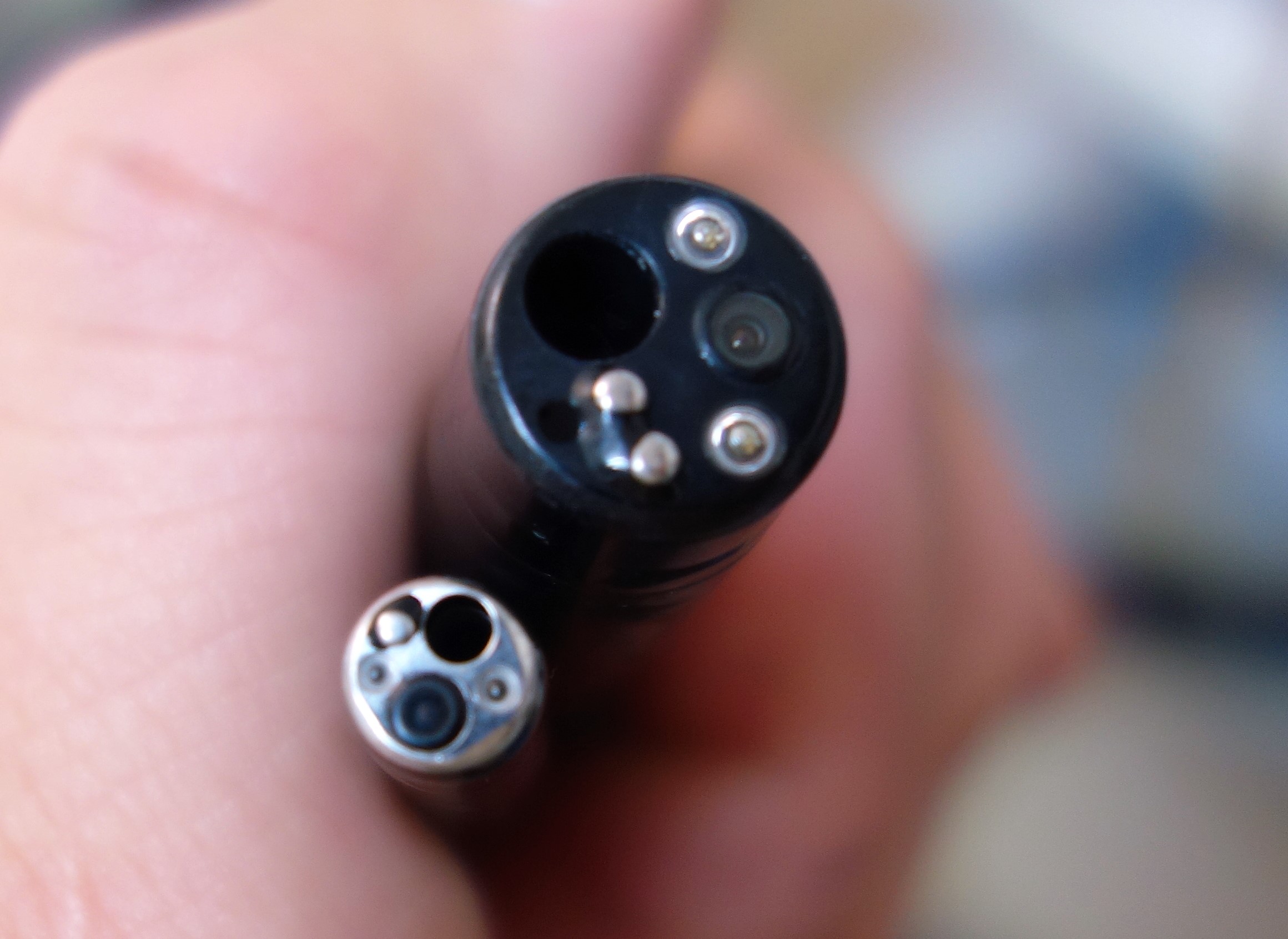
and working channels. Photo: melvil via Wikimedia Commons,
CC BY-SA
4.0.

Gerstenberger (Caninus) via Wikimedia Commons,
CC
BY-SA 3.0.
8-Point
Checklist for Choosing an Endoscope CDMO
Use this checklist for either product type. Mark each item as
pass, gap or not applicable.
| # | Check | Why it matters | What to ask for |
|---|---|---|---|
| 1 | ISO 13485 QMS (current scope) | ISO 13485:2016 is the medical-device QMS standard. Since February 2, 2026, FDA’s Quality Management System Regulation (QMSR) incorporates ISO 13485:2016 by reference into 21 CFR Part 820. |
Certificate, scope statement, sites covered, last audit date |
| 2 | Finished-device vs component capability | A parts shop is not automatically a finished-scope manufacturer. QMSR applies to finished device manufacturers distributing commercially. |
Examples of finished scopes vs components only |
| 3 | Clean manufacturing environment | Optical assembly and channel work need controlled conditions. | Clean workshop description, environmental monitoring |
| 4 | Process technologies that match your design | Bending sections, tubes and tips need specific machining and polymer processes. |
CNC, laser cutting, polymer processing, inspection equipment |
| 5 | Sterilization or reprocessing path | Single-use: validated sterilization and packaging. Reusable: validated cleaning/disinfection/sterilization instructions for the finished device. |
Sterilization method and validations or reprocessing validation plan |
| 6 | Biocompatibility and materials control | Patient-contact materials need documented evaluation (commonly ISO 10993 series). |
Material specs, supplier controls, biocompatibility strategy |
| 7 | Regulatory documentation support | Brand owners still own the submission, but the CDMO must produce manufacturing and test records the file needs. |
Which markets they have supported; sample documentation list |
| 8 | Capacity, change control and after-sales | Scope programs fail on late ECOs, unstable yields and weak spare-parts supply. |
Lead-time ranges, ECO process, training and spare parts |
How to use the checklist in RFPs: send the same
eight questions to every shortlisted plant. Compare answers side by side
before you visit. A site visit should confirm clean areas,
bending-section and tube processes, leak/optical test stations, and
document control—not only a showroom.
Red Flags in CDMO Quotes
Watch for these patterns when you compare proposals:
- Certificate without a matching scope. An ISO 13485
certificate that covers unrelated devices or a different site does not
prove endoscope capability. - “We can do both reusable and single-use” with no evidence
for either. Ask for process flow, sterilization partners (if
single-use) and reprocessing validation experience (if reusable). - No named sterilization partner or no reprocessing
plan. Whichever path you chose, one of these must be
concrete. - Vague IP and regulatory ownership. Confirm who owns
the design history file, who is the legal manufacturer for each market,
and who holds the 510(k) or CE certificate. - Price-only quotes with no test matrix. Optical,
leak, angulation and electrical tests should appear in the statement of
work. - Promises of US or EU clearance “included” with no roles
defined. Registration support is valuable; clearance itself
depends on your predicate strategy, clinical data and the authority’s
review.
How to Run a Shortlist in
Four Weeks
A practical sequence that keeps both reusable and single-use projects
honest:
- Week 1 — Product definition. Write one page:
reusable or single-use; target procedure; outer diameter and working
channel; imaging (CMOS resolution, FOV—see CMOS
vs CCD sensors and 4K
and 8K endoscopy); markets (US, EU, China, other); who will be the
legal manufacturer. - Week 2 — RFP with the 8-point checklist. Send the
same questionnaire to three to five plants. Require ISO 13485
certificates and a process flow for your product type. - Week 3 — Evidence review. Discard vendors that
cannot show either sterilization validation experience (single-use) or
reprocessing/leak-test experience (reusable). Read certificate scopes
carefully. - Week 4 — Site visit or detailed video audit. Watch
bending-section manufacture, tube assembly, optical alignment, leak
testing and document control. For single-use lines, also review sterile
packaging and sterilization release.
Do not skip the product-definition page. Most failed OEM/CDMO matches
happen because the brand asked for “an endoscope CDMO” without stating
reusable versus single-use up front.
For reusable US submissions, manufacturers should also plan against
FDA’s reprocessing validation expectations for complex reusable devices
(see FDA’s guidance Reprocessing Medical Devices in Health Care
Settings: Validation Methods and Labeling). That work belongs in
the project plan even when a CDMO writes the protocols.

Institute (US government work), public domain.
Where Endowista Fits
Where Endowista fits: Endowista is a
flexible endoscope OEM and CDMO partner, not a
hospital-brand manufacturer. It works with an ISO
13485-certified partner manufacturing facility that has
specialized in endoscope manufacturing and OEM/CDMO services since 2010.
The partner facility has more than 10,000 m² of production space with
independent GMP clean workshops, and two R&D centers in Hangzhou and
Shenzhen staffed by 40+ engineers.
Through this partnership, Endowista focuses on reusable
flexible endoscope programs and related components—not complete
single-use endoscope manufacturing. Services include:
- Flexible
endoscope CDMO for gastroscopes, colonoscopes, bronchoscopes and
sigmoidoscopes - Endoscope
components such as insertion tubes, bending sections, light guides
and operation sections - Production-line
and registration consulting - Endoscope
repair
Endowista’s operations center is in Suzhou Industrial Park (SIP),
Suzhou, Jiangsu, China, and it has a sales office in Hong Kong.
If your project is a complete single-use scope, use
the checklist above to evaluate specialists that run sterile single-use
lines (the Olympus / Vathin H-SteriScope example shows how brand and
manufacturing can be split). Endowista can still be relevant for
reusable companion products, component sourcing, or
transfer of a reusable line—but it should not be listed as a single-use
finished-scope CDMO.
Learn
more about Endowista or request
a quote for your reusable OEM/CDMO project. For a cost framing of
CDMO versus building in-house capacity, see also CDMO
vs in-house endoscope manufacturing.
FAQ
What is the difference between an endoscope OEM and a
CDMO? OEM usually means manufacturing to your design (or under
your brand). CDMO usually means a broader partnership that can include
design support, process development, manufacturing, testing and
regulatory documentation help. In endoscope RFPs the labels overlap;
judge the statement of work, not the acronym.
Do I need a single-use CDMO or a reusable CDMO?
Choose based on the finished product. One-patient sterile scopes need
sterilization, packaging and shelf-life capability. Reusable GI and
bronchoscopy scopes need durability, leak integrity and reprocessing
validation. Do not force one factory type to cover the other without
proof.
Is ISO 13485 enough to sell in the United States?
ISO 13485 is necessary but not sufficient. Since February 2, 2026, FDA’s
QMSR incorporates ISO 13485:2016 into 21 CFR Part 820, but you still
need the correct marketing authorization (often a 510(k) for these Class
II scopes), labeling and, for reusable devices, validated reprocessing
instructions.
Why are buyers searching for single-use endoscope CDMO
partners? Infection-control pressure and capital-cost pressure
pushed many brands toward disposable lines. FDA communications on
reprocessed duodenoscopes encouraged facilities to adopt designs with
disposable components or fully disposable duodenoscopes. Brands that do
not want to build sterile manufacturing often look for a CDMO or OEM
partner.
Can one partner supply both components and finished reusable
scopes? Yes, if the QMS scope and process evidence cover both.
Many programs start with critical components (bending section, insertion
tube) and later expand to finished assembly. Confirm which steps are
in-house versus subcontracted.
Does Endowista manufacture complete single-use
endoscopes? No. Endowista’s CDMO focus is
reusable flexible endoscopes and components (with
related consulting and repair). For a complete single-use scope,
shortlist manufacturers that demonstrate sterile single-use
production.
Sources
- FDA — Quality Management System Regulation (QMSR):
https://www.fda.gov/medical-devices/postmarket-requirements-devices/quality-management-system-regulation-qmsr
(effective February 2, 2026; incorporates ISO 13485:2016) - ISO — ISO 13485:2016 Medical devices — Quality management systems:
https://www.iso.org/standard/59752.html - FDA — Infections Associated with Reprocessed Duodenoscopes (includes
April 5, 2022 Safety Communication on disposable designs / disposable
components):
https://www.fda.gov/medical-devices/reprocessing-reusable-medical-devices/infections-associated-reprocessed-duodenoscopes - Olympus America — H-SteriScope single-use bronchoscope (SteriScope
trademark of Hunan Vathin Medical Instruments Co., Ltd.):
https://medical.olympusamerica.com/products/bronchoscope/h-steriscopes - Endowista — Endoscope CDMO Solutions:
https://endowista.com/end-to-end-flexible-endoscope-manufacturing-solutions/endoscope-cdmo-solutions/ - Endowista — About:
https://endowista.com/your-trusted-flexible-endoscope-manufacturing/ - FDA — Reprocessing Medical Devices in Health Care Settings:
Validation Methods and Labeling:
https://www.fda.gov/regulatory-information/search-fda-guidance-documents/reprocessing-medical-devices-health-care-settings-validation-methods-and-labeling - FDA 510(k) examples cited for market context in Endowista’s Top 10
manufacturers guide: Fujifilm single-use duodenal endoscopes
K251861; Karl Storz single-use bronchoscope
K251731 (FDA 510(k) database)
